
Department of Statistics: Population Census to Continue Until the End of October
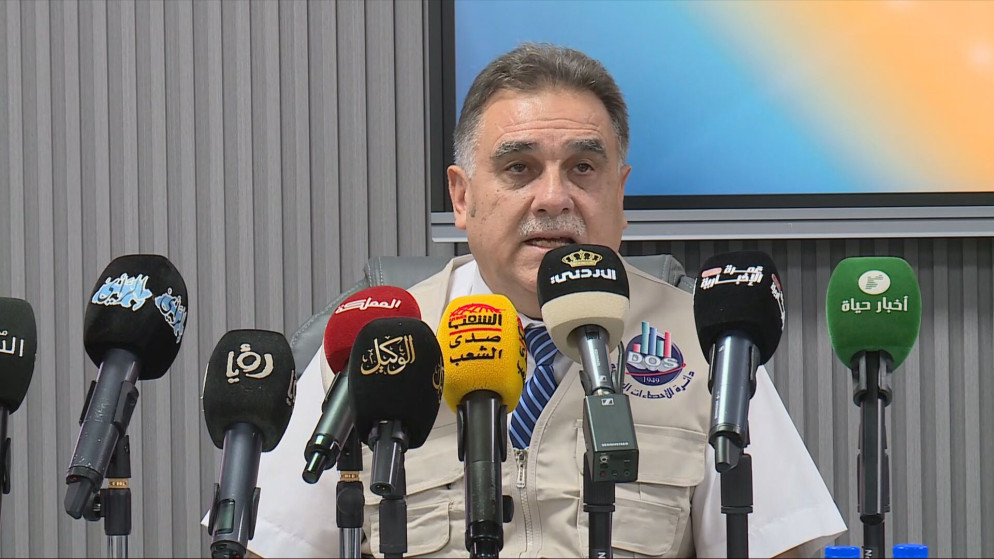
Al-Taj News – Director General of the Department of Statistics Haider Frihat said Tuesday that the 2026 General Population and Housing Census will begin on October 1 and continue until October 31, covering all residents and housing units in the Kingdom.
Frihat explained during the Government Communication Forum that the electronic self-enumeration phase through the “Sanad” application will take place from October 1 to 3, while the actual field enumeration will begin on October 4, with enumeration operations to be completed on October 31.
He noted that the census will cover 1,079,085 buildings and 24,058 statistical blocks, with the participation of around 12,000 field researchers.
Frihat said that electronic self-enumeration through the “Sanad” application will continue for three days, during which the link will be received through the application, after which the household will complete its information and the housing unit’s information and submit it electronically.
He added that self-enumeration is available to those who have previously submitted their fingerprints and provided the department with their phone numbers.
He pointed to a pilot test to be conducted during September to test readiness ahead of the census, including testing systems and field procedures, verifying the readiness of personnel and tools, and addressing observations before the actual enumeration begins, stressing that the pilot test is not considered part of the census and its data will not be included in the official results.
He explained that the census will extend for a full month, from its launch on October 1 until the completion of enumeration operations on October 31, and will cover all residents and housing units in the Kingdom.
Frihat called for verifying the identity of the researcher before beginning the interview, explaining that the statistical identification card is the official means of verification. This can be done by asking to see it, scanning the verification code on the card, and confirming the researcher’s identity, stressing the need not to provide any data before verifying the identity.
He noted that the census form includes a number of questions, including the number of household members, the educational level of its members, whether any member has functional difficulties, the type and characteristics of the housing unit, and whether household members have health insurance.
The questions cover demographic and social characteristics, educational data, functional difficulties, housing characteristics, and health insurance. They are concise questions aimed at building an accurate picture of the population and housing units.
Frihat stressed that the census does not include questions about income and does not require disclosure of the income of an individual or household, while the form focuses on demographic, social, and educational characteristics and housing characteristics, noting that the data is subject to complete confidentiality.
He said participation in the census takes place through two channels. The first is self-enumeration by opening the link sent through the “Sanad” application, completing the household and housing unit information, and then submitting it after reviewing the data.
The second channel is the actual field enumeration, by preparing a personal identification card or family book, receiving the researcher in the morning or evening, including on weekends, and allocating approximately half an hour of time.
Frihat stressed that cooperation ensures the provision of accurate and comprehensive data.
He noted that the success of the census is a shared national responsibility, explaining that it covers Jordanians and non-Jordanians residing in the Hashemite Kingdom of Jordan, and that every individual, household, and housing unit represents part of the national picture.
He added that the census represents a legal obligation, that its data is subject to confidentiality, and that it aims to support more accurate planning for the future.